| Blue's Story | |
| Chapter 2 - Coming to Australia and Going to War |
|
|
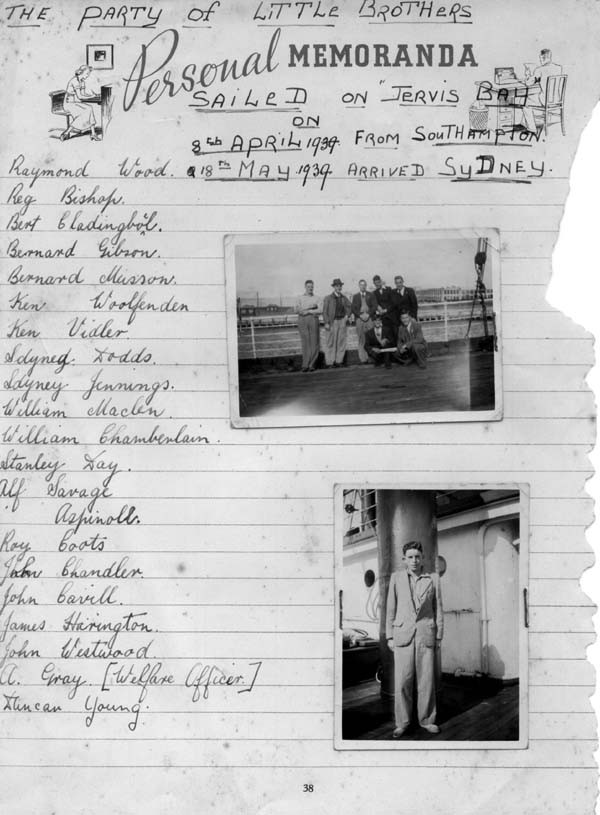
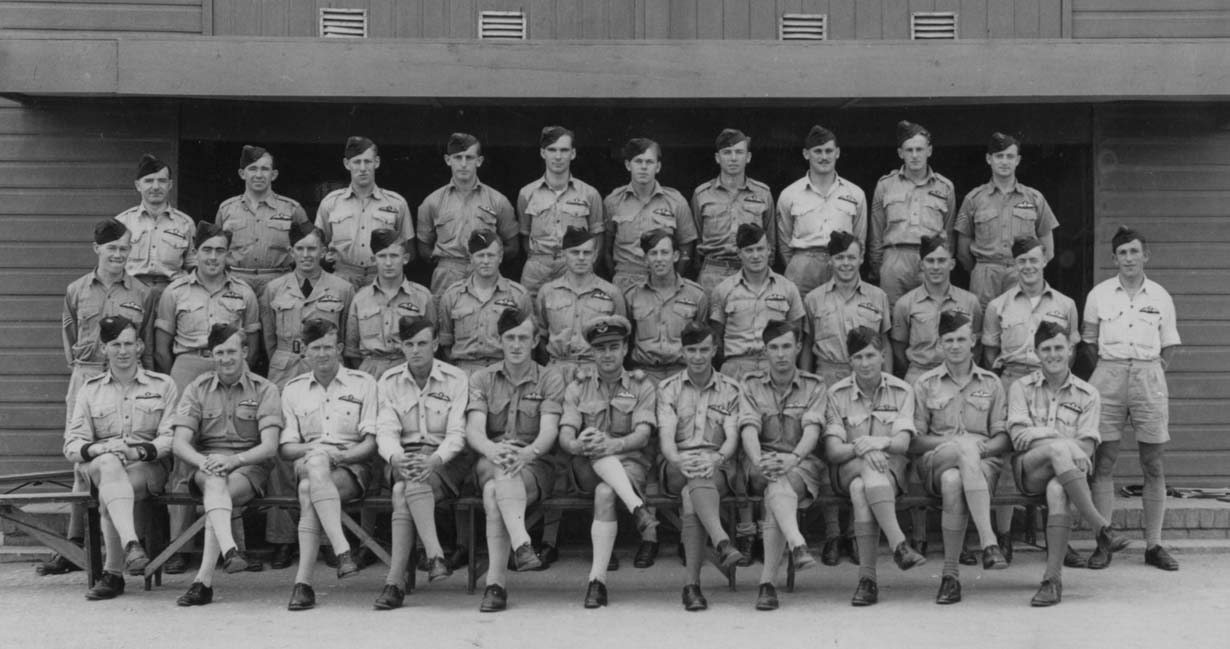
I’m halfway along the road to success, I suppose. I left home on the 5th of April 1939. My father and brother George came to see me off in Belfast on the overnight boat to Liverpool. We were about an hour and a half early. I stood on the deck of the boat. And Dad and George stood on the wharf and we waved at each other and eventually I went into the cabin and that was the last I saw of my Dad. He died later in 1947. George with my Mother, of course, came out to Australia in 1954, something like that. Anyway I went on the overnight boat to Liverpool and on the train from Liverpool to London and I had directions to go to a hotel which I remember cost me six shillings and six pence to stay overnight and have breakfast at this hotel. The next day we went to a meeting with the Big Brother Movement and all of the big old characters seeing us off said they wished they were coming with us, maybe because the war was imminent. The next day we went to Southhampton by train and we sailed on the Jarvis Bay for Australia. The Jarvis Bay called at Malta, Port Aden, Colombo, Perth, Adelaide, Melbourne then Sydney and we arrived in Sydney on the 18th of May 1939. Below is a list of the boys that I travelled with on the Jervis Bay.
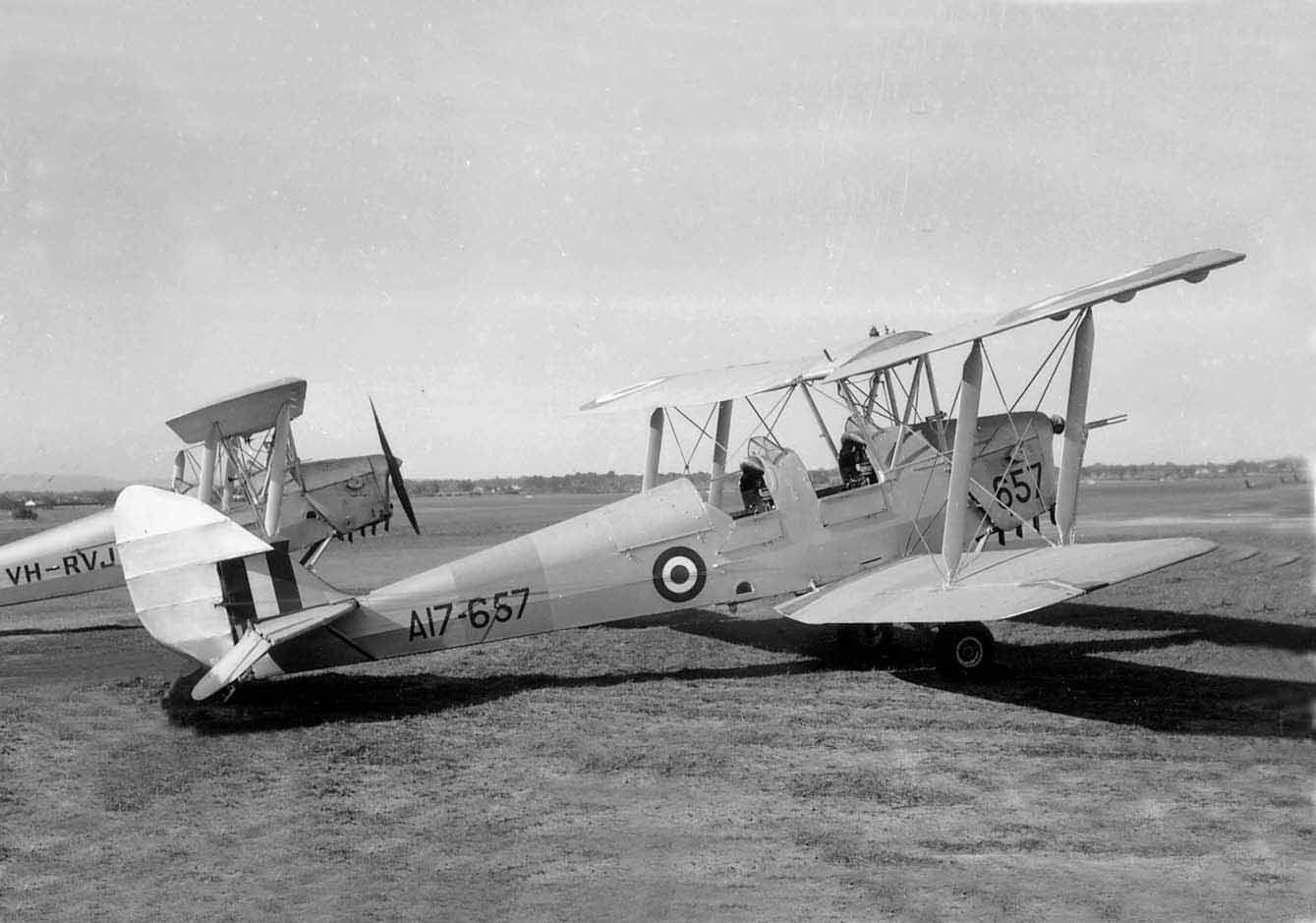
The Jervis Bay during the war was an armed merchant ship with a convoy and was attacked by a German pocket battleship and to save the convoy, the captain of the Jervis Bay turned around and steamed straight for it with I presume all guns blazing, well at least one or two, and it was eventually sunk. But in the meantime, the convoy spread out and got away which was a very heroic act and I’m quite certain will be remembered long in maritime history. It was a very brave thing for the captain and the crew of that ship (more details about the Jervis Bay can be found at uboat.net and at HMSJervisBay.com). We arrived in Sydney on the 18th of May and were greeted and eventually went out to a place called Skyville which was an agricultural training farm in those days and later became a migrant centre. We were there for six weeks learning how to milk, fence, butcher and do all the things that could be expected of a cowboy on a farm or any sort of settlement in the bush, and we were allocated jobs from there. My first job I went to work for a bastard who was a Scotsman out at a place called Young. I lasted exactly 14 days and then told him what to do with the place. He really was a difficult man. He even used to speak to me about putting salt on the edge of my plate which he thought was a waste of salt. Anyway after a fortnight I told him what to do with the job and went back to Sydney. The next job I got from the Big Brother Movement, who were very apologetic about the first job they sent me to was with big Bill McClintock at West Wylong, which was a wheat and sheep place. Old Bill, even though he had a terrible temper and was a huge man I got on well with him because I was determined I wasn’t going to stay for only a fortnight in this job. I stayed for two years and went to town twice in that time in which time I saved 35 pounds, as it was in those days, Australian pounds. So at least I had some money. I often recall the story that when I arrived in Australia I had 2 pounds ten and used to say to people 20 or 30 years later that I still had it. Here I am on Bill McClintock’s wheat and sheep place outside West Wylong and actually he was a kind old bloke really and I learned a lot working for him and also how to ride a horse. The first time he saw me on a horse he said I’d never ride it again with a saddle and from there on I had to ride the station pony called Dirk, and Dirk with just a bag on his back I used to go and get the mail. And Dirk was a cunning little horse he would be galloping along and then he would twitch his ears and throw me off and gallop back to the station with his tail stuck straight in the air and of course everybody at the station thought this was hilarious but I eventually learnt that every time Dirk twitched his ears he was going to throw me off so I was ready for it and eventually I learnt to stay on and got quite good at riding bareback. I was there for two years and I would have stayed longer but I rather felt that old Bill was going to marry me off to one of his rather large daughters because he and his wife were going to church and said he was going to leave me and his daughter at home and I could sense a trap for me to be got caught up in so I said “No, I’ll come to church with you.” He looked a bit amazed. Anyway after two years I left there and went to Sydney because I was going to join up. At that stage the war had started and I was waiting for approval to come through from my family. So I left Sydney and went down to Mildura and pick fruit and stayed with a Mrs Rymer’s boarding house. After picking some fruit and not liking it very much I went to work for Maples, a local store in Mildura, and worked there until I left Mildura and went to Melbourne to join up. In Melbourne we went to the naval recruiting office, my friend and I, and after we’d passed all the tests it would be nine months before we were called up and we abused them and said that when we were in Mildura they were saying they were urgent for men and that’s why we had left the job. Eventually the naval officer called a guard and had us thrown out of naval house and we got a letter next day to say we couldn’t join the navy so my friend joined the army and I joined the air force. While waiting to be called up for the air force, I worked for Ben Morris on Sydney Road driving a covered wagon pulled by a horse called Nugget. Nugget had more knowledge of the city traffic than I did but we delivered groceries and we picked up supplies from the centre of the city and it was quite an adventure for six months before I went down to Somers on the Mornington Peninsula to the air force. That was the 30th of January 1942 where I joined the air force on 24 course at ITS which is initial training school. At the end of the time at ITS the Japanese had landed in New Guinea and it looked like they were going to land in Australia and six other fellows and I applied to join the army because we wouldn’t get through our air crew training for another eight months. When we got up to Melbourne to be transferred they told us they were not going to transfer us and were going to keep us on the ground staff of the air force but we were not keen enough to be in air crew so I went to Adelaide with the others and I became first of all a flight mechanics course then a fitter 2E and on completion of that I went to Bairnsdale for a short stint and then went to Tocumal which is an engine repair station, the biggest in the south east Pacific, and it was there that I had the unfortunate business of suggesting to a sergeant, a fat sergeant, that he was known as garbage guts and that didn’t do my life in the air force much good so they transferred me to cleaning bay with all the other rebels that were on the station. There we sat cleaning engines so we were only cleaning half an engine a day and I said to the officer in charge, “if we clean an engine and a half a day would you let us go and play football?” And he said oh right that would be a big improvement on what you’re doing. So I had a talk to the blokes and they all smartened themselves up and we cleaned an engine and a half and were finished by 11 o’clock. So he said I couldn’t let you go at this, it’s too early. Keep going 'til 1 o’clock and I’ll let you go then, so we worked until 1 o’clock and he let us go then. Soon they put the number of engines up to three a day and we still cleaned three engines a day then went to play football. Of course this made a big difference to the performance of the engine repair squadron at Tocumal and the administration officer called me in and said, “you’re ex air crew, aren’t you?” and I said yes, and he said would you like to go back to air crew, and I said I certainly would so he signed the papers and had me transferred back to air crew. And I headed off to Melbourne and then down to Somers where I continued with my air crew training, or ground subjects, I was then transferred to Western Junction in Tasmania where we were taught to fly Tiger Moths. This was a great scheme and we enjoyed every moment of it. It was exhilarating to go flying in a tiger moth and flew during the day and we even did night flying in them.
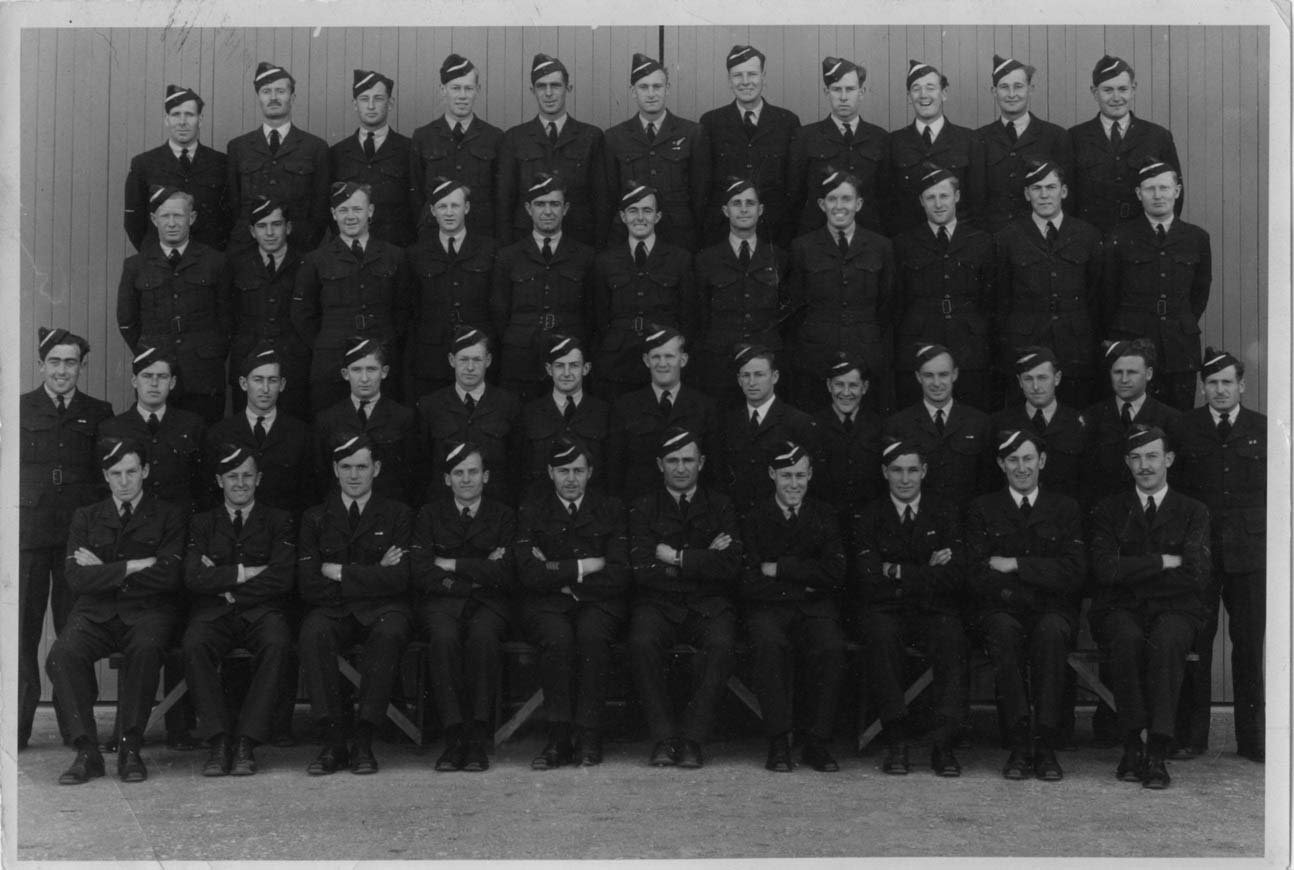
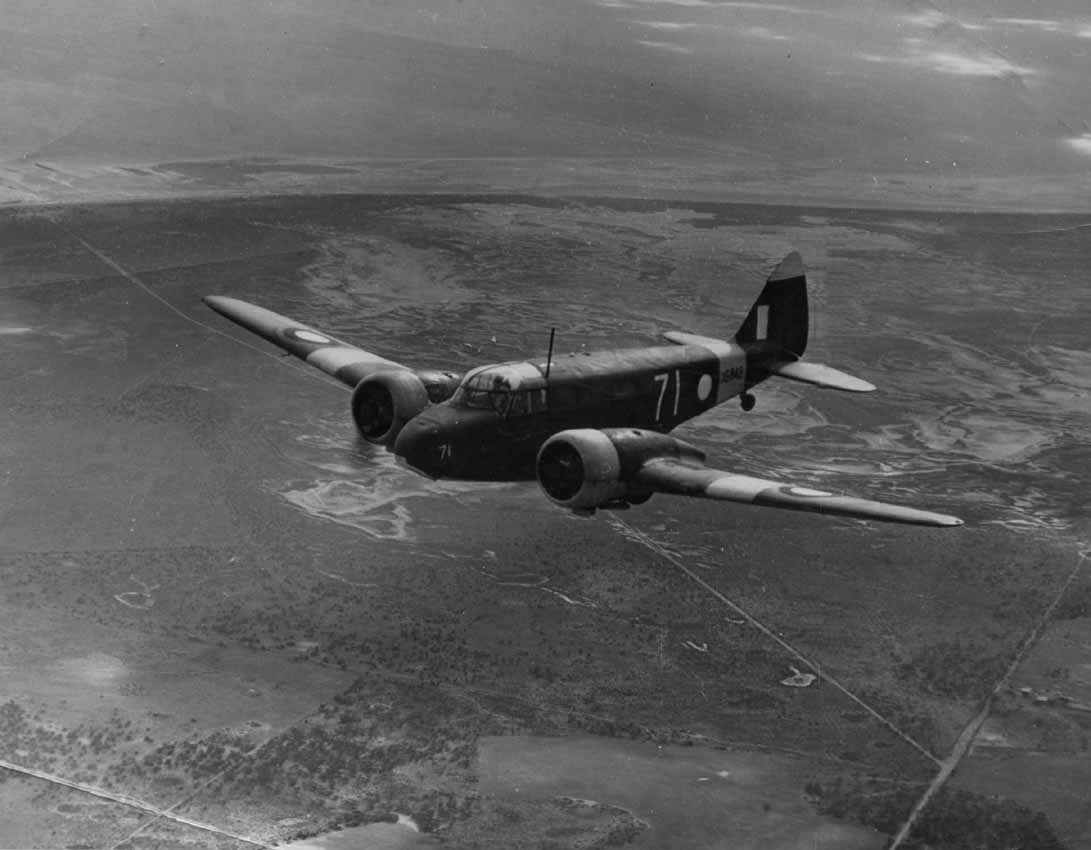
When we finished at Western Junction we went from there to Point Cook. At Point Cook we were put on to twin engine aeroplanes which were Airspeed Oxford aeroplanes and we were flying those until we completed our training (see diggerhistory for more details on this plane). On completion of the training at Point Cook we then changed to Mallala in South Australia where we completed our training on twin engine aeroplanes and that’s where we got our wings.
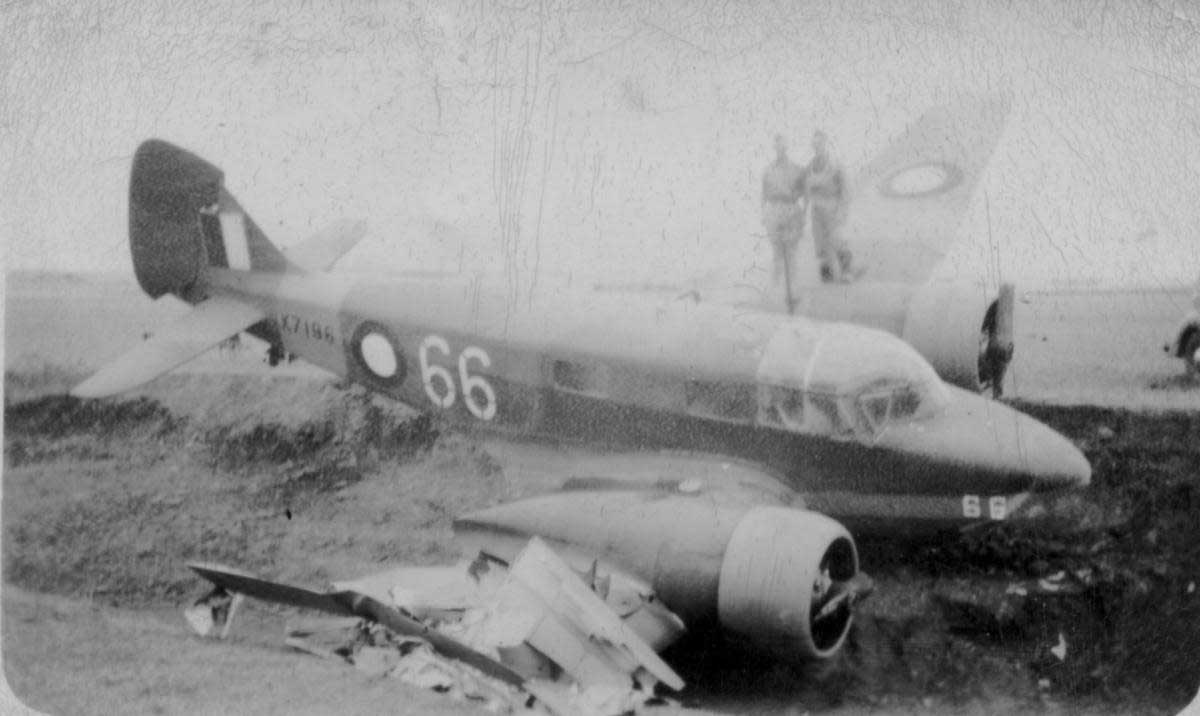
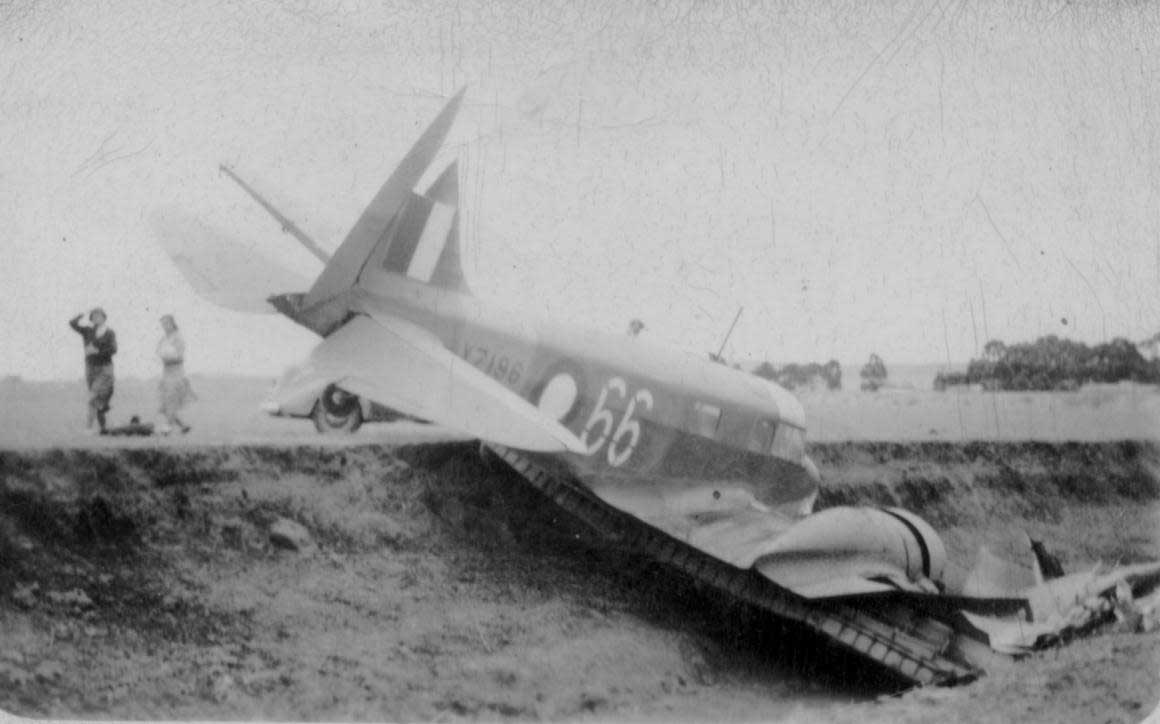
Below are some photos of an Airspeed Oxford we crashed at Crystal Brook, South Australia.
After a short time at Mallala, I was transferred to Archerfield in Queensland. We were posted to 4 Com (Communication) Unit providing pilots for ANA who had a contract with the American Air Force 322 troop carrier wing to fly from Brisbane to Manila with C47 aeroplanes. They didn’t have enough pilots so the air force provided the co pilots and ANA provided the captains. This flight went from Archerfield every night at 8 o’clock to Townsville then on to Finchhafen. From Finchhafen we dropped supplies between there and Hollandia. From Hollandia we flew on to Biak, Morotai, Tacloban and then on to Manila. We did this stint with changing crews at Finchhafen every night and it was a regular service every day for Macarthur who had his headquarters then in Manila.
|
|
| Chapter 1 - Growing Up in Ireland (Erin Go Bragh!) | |
| Chapter 3 - After the War | |
| Chapter 4 - After Flying | |
| Chapter 5 - Retirement (of sorts) | |
| Home | |